
Compression Spring Types/Applications, and Design Guide
Compression Spring Types/Applications, and Design Guide
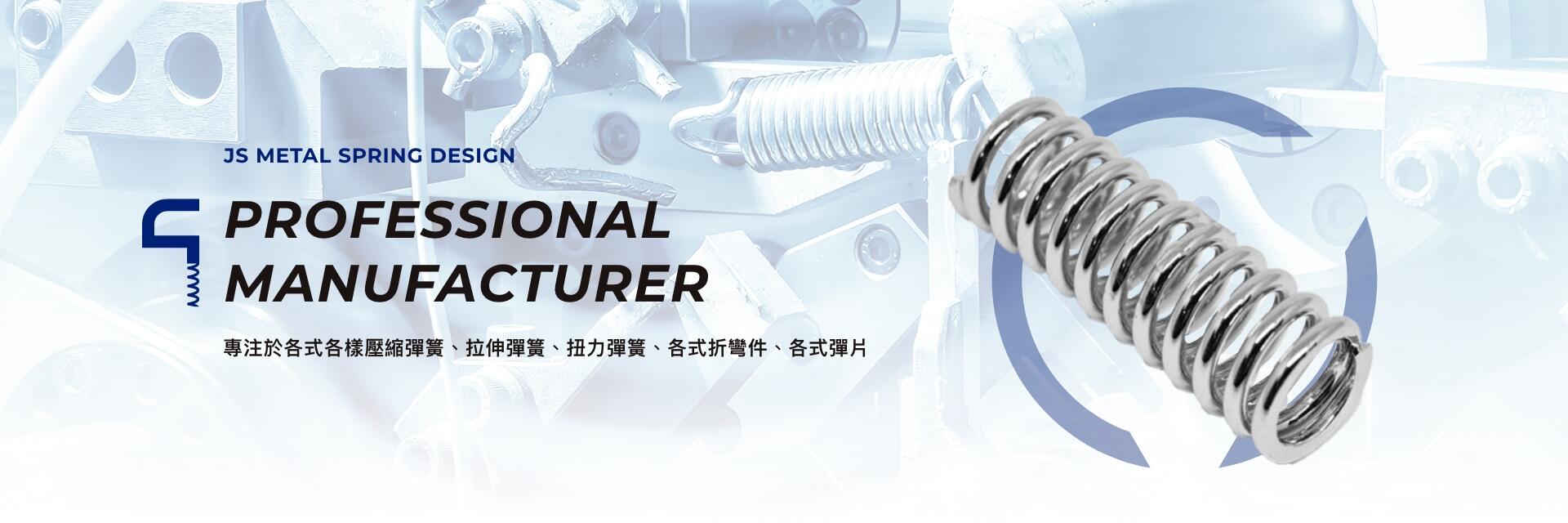
Compression springs, often simply called “compression coils,” have various classifications and design considerations. Their performance can be affected by factors such as material, shape, and end treatment. The primary classification is generally based on spring geometry:
- Cylindrical Compression Springs:
The most common standard type, featuring a consistent outer diameter from top to bottom. - Conical (Tapered) Compression Springs:
These can compress to a shorter solid height because the coils can nest without overlapping. They are suitable for limited-space applications with fixed height requirements and provide a variable spring rate. - Barrel-Shaped Compression Springs:
Featuring a convex center resembling an olive shape, these springs are mainly used to reduce resonance, save space, improve stability, and minimize lateral buckling. - Double Conical (Hourglass-Shaped) Compression Springs:
Funnel-like in appearance, these springs offer excellent vibration resistance and are commonly used in dynamic environments. - Custom-Shaped Compression Springs:
These springs have non-standard geometries, varying outer diameters, pitches, or functional designs. They are not necessarily cylindrical and may also be manufactured using flat wire materials. - Variable Pitch Compression Springs:
The spacing between coils is unequal, enabling progressive spring resistance during compression.
The following parameters are essential in compression spring design:
- Wire Diameter – Diameter of the spring wire
- Outer Diameter (OD) – Maximum outside diameter of the spring
- Inner Diameter (ID) – Minimum inside diameter of the spring
- Number of Coils
- Free Length – Original unloaded height of the spring
- Working Height – Height under operating compression
- Load – Force generated when compressed to the working height
Each of these dimensions affects the fatigue life and durability of the compression spring.
In some cases, customers may require ground spring ends for improved performance:
- Both ends ground flat to enhance stability and prevent tilting under load.
- Partially ground or standard closed ends offer lower manufacturing cost and are suitable for applications where strict perpendicularity is not required.

2026-05-19