
News

Springs-Compression Springs
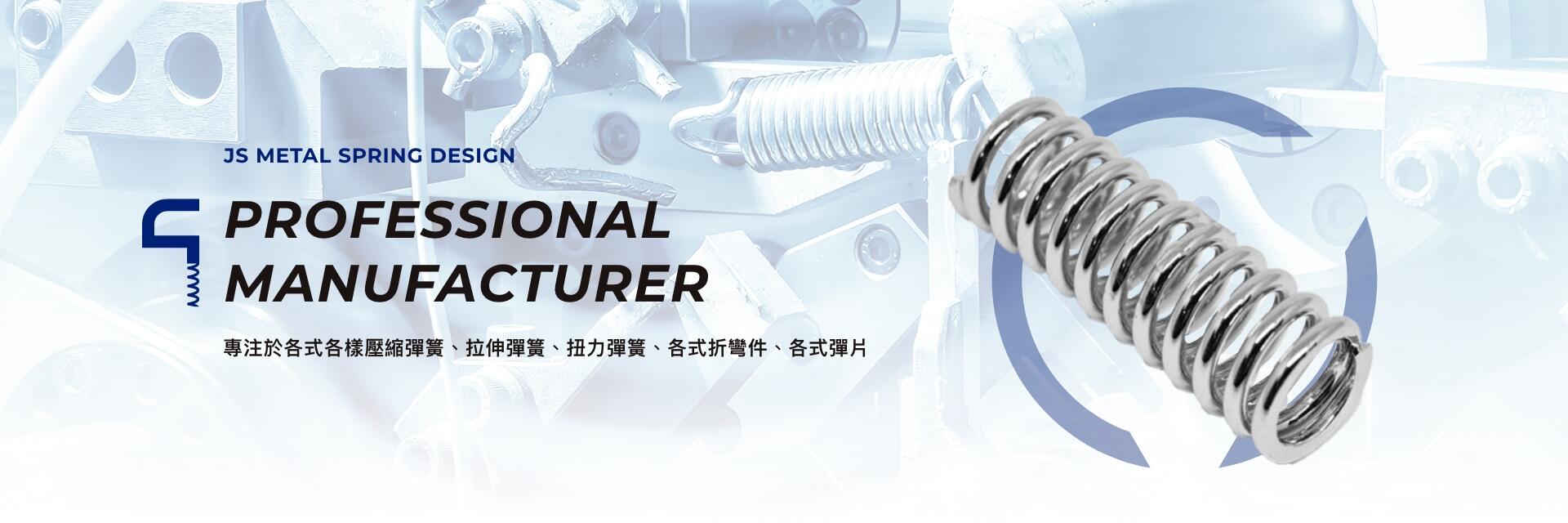
Compression springs are one of the most common types of springs and are mainly used to withstand compressive loads. When an external force is applied, the spring shortens, and once the load is removed, it returns to its original shape. They are usually coiled in a helical form, and both ends can be ground flat or formed into specific shapes as needed for easier installation or positioning.
Compression springs are among the most widely used springs and belong to the category of helical springs designed to bear compressive forces. When compressed, they store energy and then automatically return to their original length after the load is released, providing a restoring force. Most compression springs are cylindrical, but conical (tapered) or variable pitch designs are also available for special applications.
Torsion Springs /Torsion Spring Manufacturer
A torsion spring is a mechanical component that utilizes the elasticity of the material to generate torsional force. When both ends are twisted by an external force, the spring stores energy and produces a reactive torque, returning to its original position after the load is released. Torsion springs are widely used in products that require rotational force or positioning functions, such as automotive parts, home appliances, tools, electronic devices, and door hinges.
We are a professional torsion spring manufacturer with many years of production experience and advanced automated equipment. We are capable of precisely manufacturing torsion springs that meet various specifications and performance requirements. From material selection, design and development, prototyping and testing, to mass production and delivery, we strictly control quality at every stage. We also respond quickly to customized demands, helping our customers improve product performance and enhance market competitiveness.
Compression Springs /Various Types of Compression Springs
A compression spring is a type of helical spring that stores energy when subjected to compressive force and returns to its original shape when the external force is removed. When pressure is applied, the spring compresses and generates a reactive force to resist the load. It is commonly used to absorb shock, support loads, or control movement.
Cylindrical compression spring: The most common type, with uniform outer and inner diameters throughout its length. Suitable for general applications.
Conical compression spring (tapered spring): The overall shape is conical, with a smaller diameter at the top and a larger diameter at the bottom. It can achieve a lower solid height when compressed, making it ideal for applications where space savings are required.
Variable pitch compression spring: The coil spacing is uneven, providing a progressive load-deflection curve. Commonly used in applications that require cushioning or multi-stage stiffness.
Barrel-shaped (olive-shaped) compression spring: A type of compression spring with an overall olive or barrel-shaped profile.
Various Retaining Rings/ Extensive In-Stock Selection in Multiple Specifications
JS Metal offers a wide variety of external and internal retaining rings, including C-type, E-type, R-type, S-type, IS-type, and IR-type rings. With a full range of specifications and stable quality, our products are widely used in the automotive, machinery, electronics, and hardware industries.
We maintain a large inventory for prompt delivery, supporting both retail and bulk orders. Custom manufacturing based on drawings is also available. Inquiries are welcome!
External Tooth Lock Washer/External Tooth Washer
External Tooth Lock Washer, also known as an external tooth washer, is a type of locking washer featuring serrated teeth around its outer edge. It is primarily used to increase friction between screws or nuts and the mating surface, preventing loosening.
The outer edge of the washer is equipped with multiple outward-extending serrated teeth that bite into the surface of the fastened material upon installation, enhancing anti-slip and locking effects.
The external tooth design provides a larger contact area with the mating surface, increasing friction and assisting in conductivity requirements.
Common materials include carbon steel, stainless steel, and phosphor bronze.
Surface treatments such as zinc plating, nickel plating, and black oxide are applied to improve corrosion resistance and durability.
Widely used in electronic devices, electrical components, automotive parts, and mechanical assemblies.
Particularly suitable for applications requiring good conductivity and resistance to vibration-induced loosening.
Internal Tooth Lock Washer/Internal Tooth Washer
Internal Tooth Lock Washer, also known as an internal tooth washer, is a type of washer with inward-facing serrations. It is primarily used to increase friction between the screw or nut and the mating surface, thereby preventing loosening.
The inner edge of the washer features serrated internal teeth, which bite into the contact surface upon installation to provide an anti-slip effect.
Commonly used with screws that have larger heads or in applications where space is limited.
The teeth extend inward and are not exposed, making them suitable for applications where appearance or safety is a concern.
Common materials include carbon steel, stainless steel, and phosphor bronze.
Surface treatments such as zinc plating, nickel plating, and black oxide are often applied to enhance corrosion resistance and durability.
Widely used in electronics, electrical devices, automotive components, and mechanical assemblies.
Particularly suitable for environments with frequent vibration or where a secure and stable connection is required.
Compression Spring/Compression Spring Factory
Compression Spring, also known as a compression coil, is the most common type of spring. It is primarily used to withstand axial compressive forces. When compressed by an external load, the spring deforms elastically and stores mechanical energy. Once the load is removed, the spring returns to its original shape and releases the stored energy.
Compression springs are widely used in various industries such as automotive, electronics, industrial machinery, household appliances, and medical devices. Typical applications include suspension systems, switches, valves, and battery contact terminals.
Springs – Spring Manufacturer
A spring is a mechanical component that stores and releases energy through material elasticity and deformation. Springs are widely used across various industries, including automotive, electronics, machinery, home appliances, and medical equipment. Common types include compression springs, extension springs, torsion springs, wire form springs, and disc springs.
A spring manufacturer specializes in the research, design, and production of various types of springs. We are committed to delivering high-quality, high-precision products that meet international standards. Equipped with advanced automated manufacturing systems and testing instruments, we offer customized solutions tailored to client needs — from small-batch prototypes to high-volume production.
Core Strengths:
Complete in-house production capabilities: including wire selection, forming, heat treatment, surface finishing, and quality inspection
Customized design service: development based on drawings or samples with rapid turnaround
Certified quality assurance: products comply with international standards such as RoHS, REACH, ISO 9001, and IATF 16949
Typical Product Applications:
Automotive, bicycle, and motorcycle hardware components
Electronic hardware parts: including office equipment, scanners, laptops, and computer peripherals
Industrial spring hardware: such as hydraulic springs, magazine springs, oil seal springs, and die springs
Consumer products: including springs for household appliances, electronics, and toys
Retaining components: including snap rings, circlips, E-rings, R-clips, S-clips, internal retaining rings, and spring pins
Spring Pin/C-Type Spring Pin/Pin Specifications
Spring Pin – C-Type Spring Pin Overview
The C-Type Spring Pin is an elastic positioning pin featuring a longitudinal slot and a cross-sectional shape resembling the letter "C". It is typically made from high carbon steel or stainless steel and heat-treated to ensure excellent elasticity and shear strength. C-type spring pins are widely used for joining or positioning components in machinery, automotive systems, tools, and electronic devices.
Key Features:
C-shaped cross-section: Provides consistent radial pressure for secure retention in mounting holes.
High elasticity: Capable of absorbing vibration and shock, protecting surrounding components.
Easy installation and removal: No threads or special tools required; can be press-fitted into place.
Functions and Uses:
Connects two or more parts while providing secure positioning and shear resistance.
Acts as a safety positioning element to prevent parts from loosening or falling out.
Suitable for small to medium-sized holes, especially where space is limited or quick maintenance is required.
Common Applications:
Automotive components
Small machinery
Household appliances
Tool handles and linkages
Specifications:
Material: Carbon steel (e.g., EN 10270-1, S50C, SAE1060–SAE1090), stainless steel (e.g., SUS304, SUS301, SUS420)
Surface treatment: Black oxide, zinc plating, electroless nickel plating, etc.
Size range: Typically from Ø1.5 mm to Ø12 mm
Torsion Spring /Torsion Spring Supplier/White Zinc Plated
A torsion spring is a type of spring that generates torque when force is applied. It is commonly used in mechanisms that require rotational force or angular return, such as clamps, door hinges, automotive components, and electronic devices.
The surface is treated with white zinc plating, which not only enhances corrosion resistance and extends the product’s service life but also improves its overall appearance.
Key Features:
Provides stable and consistent torque output
White zinc plating offers excellent rust and corrosion resistance, suitable for outdoor or humid environments
Customizable in terms of angle, torque, dimensions, and leg configuration to meet customer requirements
Various Type of Compression Springs-Springs
Compression Springs are the most common type of mechanical springs. Their primary function is to store energy and generate a return force when subjected to compression. They are widely used in automotive systems, industrial equipment, electronic devices, and medical instruments, serving as components for cushioning, shock absorption, support, or return motion.
1. Straight Compression Springs:The most basic type, with uniform wire and outer diameter.Suitable for general linear load applications.
2. Conical Compression Springs:Cone-shaped springs offering excellent stability and self-centering capabilities.
Ideal for space-limited or nested applications.
3. Barrel (Convex) Compression Springs:Wider in the middle and narrower at both ends.Helps reduce lateral deflection and wear, commonly used in high-vibration equipment.
4. Hourglass (Concave) Compression Springs:Narrow in the center and wider at the ends.Well-suited for applications requiring centralized guidance.
5. Variable Pitch Compression Springs:Designed with uneven coil spacing.Provides a non-linear force response, customizable for progressive load requirements.
6. Wave Springs: Made from flat wire formed in a wave pattern.Compact design delivers high force in applications with limited axial space.
Spring Manufacturer – Precision Spring Production-Spring Design
We are a professional spring manufacturer specializing in the design and production of custom springs.
Our product range includes compression springs, extension springs, torsion springs, wire forms, and specialty springs, widely used across various industries such as automotive, electronics, machinery, and medical devices.
Our production capabilities include:
Precision manufacturing with advanced CNC equipment, including CNC spring forming machines, CNC compression spring machines, CNC extension spring machines, and CNC torsion spring machines to produce a wide variety of metal spring components.
State-of-the-art inspection equipment from Japan, such as load testers (compression and torsion), optical projectors, fatigue testing machines, and salt spray testers, ensuring all dimensions meet the highest tolerance standards.
Diverse material options: SUS304, SUS316, SUS631, SUS301, music wire, carbon steel wire, oil-tempered wire, phosphor bronze, beryllium copper, Inconel, alloy steel wire, and more.
Various surface finishes: white zinc plating, trivalent chromate, black oxide, phosphate coating, passivation, nickel plating, painting, E-coating, tin plating, gold plating, rust preventive oil, Teflon, Dacromet, and other coatings.
JS Metal provde OEM/ODM services: We support professional OEM and ODM projects, and are equipped to handle both small-quantity and high-volume production requirements.
Strict quality control to ensure dimensional accuracy and consistent performance.
JS provides high-quality spring solutions with fast lead times and dependable customer service.
Torsion Springs – Custom Design - Manufacturing Services
Torsion Springs – Function, Structure & Design Considerations
A torsion spring is a mechanical spring that stores energy through twisting deformation when subjected to rotational torque. It is commonly used in mechanisms requiring rotational force return, such as door hinges, clamps, switches, and automotive components.
Function & Structure:
A torsion spring consists of helical coils and two legs (spring arms). When the legs are rotated inward or outward, the spring generates torque and a restoring force. Although capable of bi-directional rotation, torsion springs are typically designed to operate in one direction for optimal performance.
Design Considerations:
Wire Diameter: Affects the spring’s stiffness and torque capacity.
Number of Coils: More coils allow greater angular deflection and flexibility.
Leg Length and Angle: Customizable into L-shape, U-shape, Z-shape, or hook form to suit installation space and force direction.
Winding Direction: Left-hand or right-hand winding is determined based on the application’s rotational requirements.
Material Selection: Choose materials such as SUS304, carbon steel, phosphor bronze, or Inconel based on operating environment (e.g., corrosion, temperature, fatigue).
Types of Torsion Springs:
1.Single Torsion Spring: Designed for applications requiring torque in a single direction.
2.Double Torsion Spring: Two springs wound in opposite directions and connected by a central straight section, offering greater or
balanced torque output for symmetrical force distribution.
Internal Retaining Ring Manufacturer – Retaining Rings(Shaft)
An internal retaining ring is a mechanical fastener installed in a groove inside a bore or housing. Its primary function is to prevent components from moving axially and to provide stable retention. It is commonly used in bearing housings, bushings, mechanical casings, and various precision assemblies.
Bore Diameter: The retaining ring specification and groove dimensions should be selected according to the actual inner bore size.
Load and Application Conditions:
For light-load or static applications, thin-section retaining rings are suitable.
For heavy-load or high-speed applications, thicker or higher-strength materials should be used.
IR Type: This is the standard internal retaining ring, suitable for most industrial applications.
Wave Springs – Professional Customization
A wave spring is a type of compression spring made from flat metal wire formed into a wavy or sinusoidal pattern. It is designed to save axial space while maintaining force requirements. Compared to traditional round-wire compression springs, wave springs can reduce the working height by up to 50%, making them ideal for compact applications requiring precise load control.
Structural Types:
Single Turn, Multiple Waves:
Ideal for applications with short travel and limited installation space.Multi Turn, Wave Coil:
Offers longer working deflection and improved load stability.Custom Designs:
Can be tailored to specific requirements including wave count, number of turns, material, and load specifications.
Applications:
Aerospace and Automotive Industries
(e.g., bearing preload, transmission assemblies)Medical Devices and Electronics
(compact assemblies with precision force needs)Sealing Components
(e.g., mechanical seal preload elements)Industrial Machinery
(where axial space is limited and controlled motion is needed)